

Importance of Mukhagni and Pind Daan in Arya Samaj Cremation Services Delhi at Dayanand Mukti Dham
October 29, 2026
Arya Samaj Perspective on Simple and Meaningful Antim Sanskar Services in Delhi at Dayanand Mukti Dham
November 3, 2026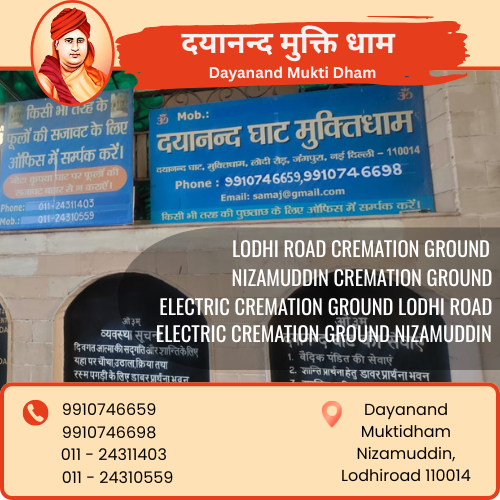
Most family planning stops at the pyre or the furnace. The mind is occupied with hospital papers, who will light the fire, and how to get elders through the morning. Then the cremation ends, and a second set of questions arrives at once: When do we collect the ashes? Who should receive them? Where do we go for visarjan? What if we cannot go to the river today?
Dayanand mukti dham at Nizamuddin Lodhi Road treats this second phase as part of antim sanskar, not an afterthought. Operated by Arya Samaj Lodhi Road, Jor Bagh, the ground supports traditional wooden cremation, Mokshda, and electric cremation, with guided collection, urn arrangements, and short-term asthi storage. For families who searched under stress for the best cremation ground near me Delhi, knowing the after-cremation sequence in advance prevents a dignified rite from dissolving into confusion.
The moment cremation is complete is not the end of duty
Cremation releases the body. Asthi collection and immersion complete the family’s practical and ritual custody of the remains. In many households, this is as emotionally charged as mukhagni. The urn becomes the focus of care. Decisions about the river, the timing, and which relatives must be present can reopen grief just when people thought the hardest hour had passed.
A reliable ground reduces that shock by making the sequence predictable. At Dayanand mukti dham, staff direction after the rite is part of the service design: where to wait, when collection will be possible, and what to do if immersion cannot happen the same day.
How collection timing differs by method
Families should not assume a single universal clock.
Electric cremation is typically faster from start of process to readiness for collection than a long open-wood burn. That is one reason households under travel pressure choose it. Once the process is complete and staff clear the remains for handover, the family is guided to collect in an orderly way.
Traditional wooden cremation generally takes longer before ashes are ready. The fire must complete; collection follows the ground’s process for that platform. Mokshda, as a more efficient wood-based system, often sits between a full conventional pyre and electric in overall duration, though exact timing still depends on the day’s operations.
When you book, ask a direct question: “For our method, when should the family return for asthi?” That single answer helps elders, children, and outstation relatives plan without standing in uncertainty. It is also how a search for the best cremation ground near me Delhi becomes operational rather than hopeful.
Who should collect—and what to bring
Assign one authorised family member as the collector, ideally the same coordinator who handled formalities at arrival. Multiple relatives giving different instructions at the collection point creates avoidable tension.
Bring:
- The reference or receipt details provided during admission
- Photo ID of the person collecting, if asked
- The urn, if already purchased; otherwise use the on-site shop at Dayanand Mukti Dham for a suitable vessel
- A simple bag or cloth wrap for respectful carrying
Keep conversation at the collection point brief and clear. This is not the moment for unresolved family disputes about visarjan location. Those decisions should be taken, even provisionally, before collection when possible.
Using the asthi locker when immersion must wait
Not every family can go to the river on the same day. Fog, rain, late cremation timing, medical limits on elders, or relatives still in transit all intervene. The asthi locker at Dayanand mukti dham exists for short-term secure storage so ashes are not kept in an improvised way at home or in a vehicle.
If you may need the locker, say so at booking or immediately after the rite. Ask about reclaim procedure, timing, and which ID is required for release. Treating storage as a planned facility—not an emergency favour—is part of mature after-cremation care.
Families often discover that the best cremation ground near me Delhi is the one that solves this quiet problem: what to do with asthi overnight without panic.
Immersion (visarjan): planning the journey, not only the prayer
Visarjan is the immersion of ashes in sacred water according to family custom, commonly associated with the Yamuna in Delhi or with other rivers and tirthas when families travel onward. The spiritual meaning is release and continuity; the practical meaning is a second logistics chain.
Before leaving the ground, decide:
- Same-day immersion or deferred?
- Which relative must be present?
- Which ghat or water body is intended?
- Is weather or health a constraint?
- Do you need priestly guidance at the immersion point, or will family prayer suffice?
If the river route is congested, flooded, or unsafe for elders, deferral is not failure. It is care. Store ashes securely, rest, and complete immersion when the family can do so with attention.
Documents and memory after the fire
After collection, keep your cremation-day papers together: admission details, any receipts, and notes related to death-certificate follow-up if still in process. Dayanand Mukti Dham can guide families on post-rite administrative direction; the family must still complete civil formalities through the proper channels.
Also preserve a simple written record of the day—method used, time of collection, place intended for visarjan. In large families, memory diverges quickly. A short note prevents later conflict about what was done.
Emotional pacing: do not force a single continuous marathon
Some households try to finish hospital release, cremation, collection, and immersion in one unbroken arc. For young, local, highly supported families, that can work. For mixed-age families, it often produces exhaustion and sharp words at the river.
A steadier pattern used by many is:
- Complete cremation with full attention
- Collect asthi when called
- Rest and eat
- Perform immersion when the key people are safe to travel
The best cremation ground near me Delhi, in this sense, is not only efficient at burning. It is humane about the limits of the living.
Common after-cremation mistakes
Leaving collection to “whoever is free” without authorising one person.
Assuming ashes will be ready at an exact clock time without asking staff.
Carrying remains loosely without a proper urn.
Starting for the river in unsafe weather with frail elders.
Forgetting that locker reclaim also needs a clear process.
Mixing up administrative death-certificate tasks with visarjan tasks until both are delayed.
Each mistake is preventable with one coordinator and three questions asked before the rite ends: When collection? Where storage if needed? When immersion?
How Dayanand Mukti Dham supports the full after-sequence
The ground’s role after cremation includes guided collection, access to urns and essentials through the on-site shop, priestly clarity when families ask for ritual direction, and short-term asthi locker use. Combined with the earlier chain—hearse, freezer box when required, prayer hall, and method choice—this is what makes the campus feel complete.
Call 9910746659, 9910746698, 011-24311403, or 011-24310559 if you need to align collection expectations with your method in advance. Operating hours are commonly listed as 7 AM to 7 PM, seven days a week; collection planning should respect process timing within those operations.
Closing the rite with the same care as it began
Antim sanskar begins with presence and ends with release. Asthi collection is the handover of what remains into family custody. Immersion is the family’s chosen return of those remains to water and memory. Between the two sits the need for order: a vessel, a time, a person responsible, and a plan that protects the elderly and the exhausted.
If you are still arranging the day, choose a ground that treats this sequence as standard. Dayanand mukti dham is organised for that standard at Lodhi Road—so that when someone in the family types best cremation ground near me Delhi, the answer includes not only the fire or the furnace, but the calm afterward.
Collect with attention. Store if you must. Immerse when the family can do so without harm. That is how the hours after cremation remain part of respect—not a scramble that undoes the dignity of everything done before.


